









AI won’t fix travel’s technology problem. It will expose it.
AI agents, AI search, AI payments, AI personalisation. How will artificial intelligence change the way people research, plan and book travel?
Before we worry about AI agents booking our holidays, travel has some basic technology problems to fix.
Bad data. Disconnected systems. Confusing pricing. Clunky booking journeys. And content that doesn’t properly explain the product.
AI won’t fix those problems. It will expose them.

AI is a megaphone
If you have a brilliant product, transparent pricing, useful content, good reviews and an easy booking experience, AI has something positive to amplify.
But the reverse is also true.
If your information is inconsistent, your pricing confusing or your booking journey painful, AI won’t make those problems disappear. It could simply make it easier to choose somebody else.
So the first question for hotels shouldn’t be:
"How are we going to use AI?"
It should be:
"Are we actually ready for our customers to use AI?"
You can choose how your hotel uses AI. You can’t choose whether your customers use it, they do already.
Search is becoming even more human
Traditional search trained us to turn what we want into keywords.
"Luxury hotel Wales."
"Dog friendly hotel Devon."
"Family hotel Cornwall."
AI lets us describe what we actually want.
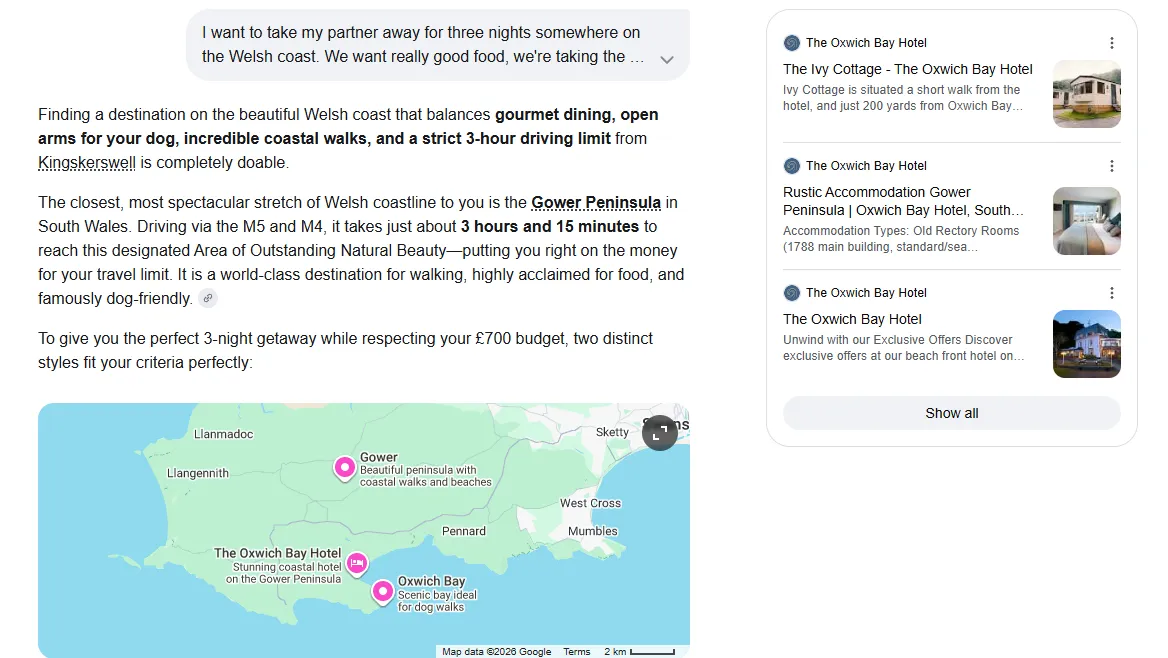
"I want to take my partner away for three nights somewhere on the Welsh coast. We want really good food, we're taking the dog, we'd like some decent walks nearby, we don't want to drive more than three hours and our budget is about £700."
That’s an opportunity for independent hotels, if AI can work out that you’re the answer. Your content needs to explain more than what the hotel has. It needs to show what the experience is, who it’s for and why someone would choose it.
What makes your food distinctive? What can a family do nearby when it rains? Why visit in February rather than July? What’s included in that package?
Customers have always asked these questions. AI can join the answers together to make a recommendation. That demands more than a page optimised for “luxury hotel Wales”.
And AI may add context and recommendations you didn’t ask for. Being in the results is one thing. How you’re described is another.
Your website isn't dead. Its job is getting bigger.
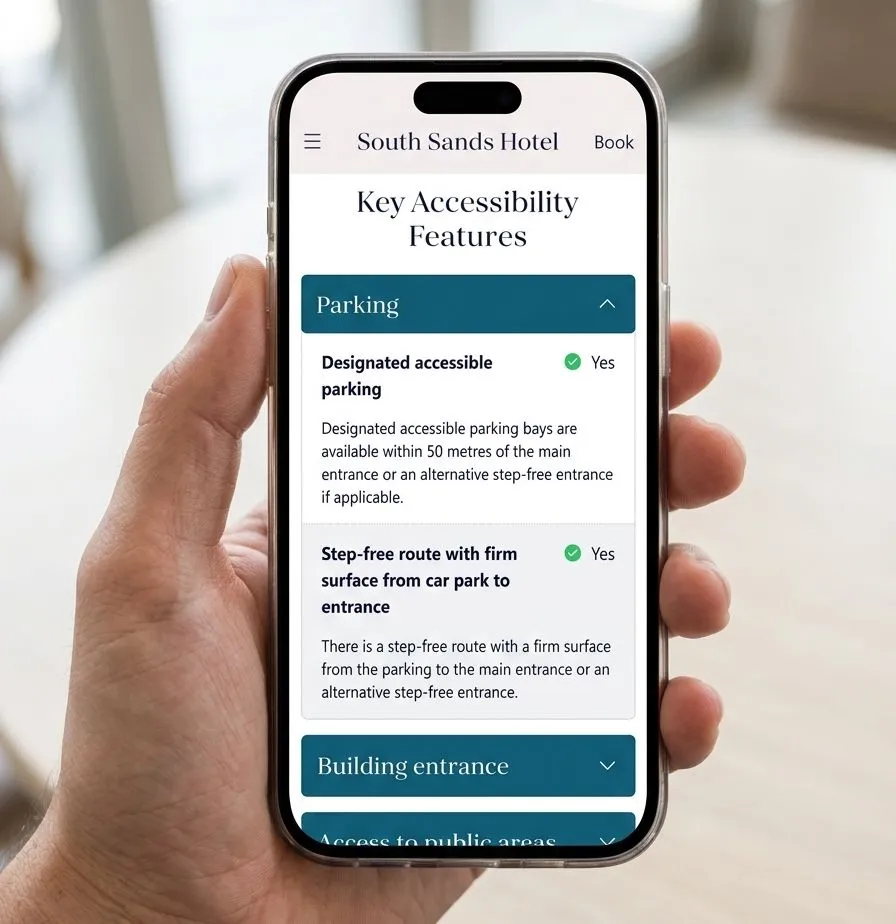
Every new technology seems to prompt predictions about the death of the hotel website. But its job is expanding: it must help customers browse and book, while also giving AI useful information on their behalf.
Your digital presence is both a sales tool and a knowledge source about your product.
That means accurate, detailed and structured information about the whole experience, not just landing pages built to capture search traffic.
Does your content give AI enough context to understand when your hotel is the right answer?
AI can't experience your hotel
AI's blind spot.
- AI hasn't slept in your bed.
- It hasn't eaten your breakfast.
- It hasn't stood at reception waiting to check in.
- It doesn’t know whether the sea view matches the photograph, or how the waiter handled a child spilling a drink.
To understand the actual experience, AI needs evidence from people who have experienced it.
That makes reviews, user-generated content, PR and credible third-party coverage valuable.
Hotels need both: their own story and independent evidence that it’s true.
SEO, PR, content and reputation management now feed the same pool of information from which AI forms an opinion about you.
Who owns the customer?
Hospitality has spent years debating direct bookings versus OTAs. AI adds another layer. Imagine telling your AI assistant:
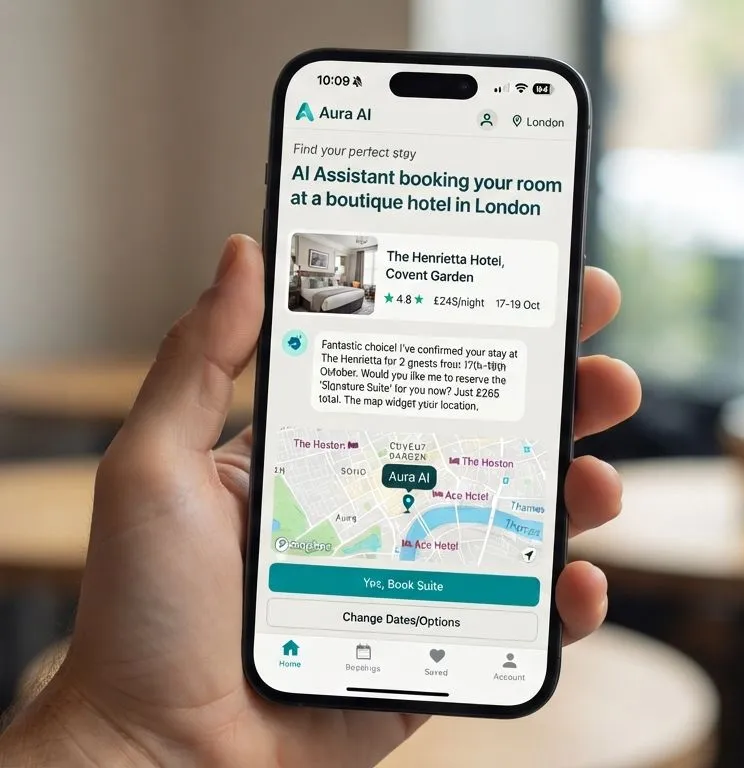
"Find somewhere for my family to stay in Barcelona for four nights during half term. We need two rooms, a pool, somewhere walkable for dinner, and I don't want to spend more than £2,000. Give me three options."
Then:
"Number two looks good. Book it."
If that becomes normal, who owns the customer: the hotel, the OTA, the booking engine or the AI above them all?
That question remains open.
Hotels need to be bookable however customers choose to buy. APIs, integrations, structured product information and system architecture aren’t just IT issues. They’re commercial ones.
Shiny AI, messy plumbing
Money and attention are pouring into the shiny end of AI: what to build, automate or put in front of the customer. Underneath, travel still has messy, legacy plumbing.
A hotel might run a website CMS, PMS, booking engine, CRM, restaurant and spa platforms, payment provider and customer-service software. Some connect. Some don’t. Some hold contradictory versions of the same information.
Putting AI on top is lipstick on a pig.
The unglamorous work comes first: clean the data, connect the systems and establish a reliable source of truth.
Don't automate the hospitality out of hospitality
Just because AI can handle an interaction doesn’t mean it should.
Breakfast times? Car park directions? Moving dinner from 7pm to 8pm? Automate it.
But my flight’s been cancelled at 11pm. I’m abroad with two tired children, a dying phone and no idea what to do next.
That’s not just an information problem. It calls for judgement, empathy and someone prepared to take responsibility. Judgement cannot be outsourced to AI. We need human agents, HI (Human Intelligence).
That’s hospitality.
The best use of AI may not be removing people from the customer experience, but freeing them from repetitive interactions so they have time for the moments that matter.

Human first approach to AI strategy
Most hotels don’t need to start with an “AI strategy” or another chatbot. Start with the basics, be clear about which moments need a human.
- Sort out the data.
- Connect the systems.
- Describe the product properly.
- Remove friction from booking.
- Be transparent about price.
- Deliver a genuinely good human experience.
Then let AI be the megaphone.