








Home Menu
Contact
Smiling man wearing glasses seated at a laptop in a bright office, with two colleagues working behind him
Woman sitting on bed holding a phone and smiling in a modern cozy room
Person relaxing in an outdoor hot tub at sunset with legs crossed and steam rising from the water.
Group of friends clinking glasses in a toast while sitting together at a table.
Better decisions with all your website data reporting in one place

How Hotel Groups can get one clear view of website and gift voucher performance

More data does not always mean better answers

A hotel group can have more reporting tools than ever and still struggle to answer a simple question: which properties, campaigns and direct-revenue channels are performing best?

Each hotel may have separate website, booking-engine, voucher and campaign reports. Together, they leave group marketers exporting figures, combining spreadsheets and debating which numbers to trust.

The answer is not one enormous dashboard. It is a consistent, trusted view that shows what is happening, why and where to act next.

The commercial cost of fragmented reporting

The hidden cost is the time spent collecting and reconciling data. Monthly reports can take days to assemble and still be outdated when they reach leadership, diverting skilled marketers from improving campaigns, content and conversion.

Fragmentation also weakens confidence. Conflicting totals shift attention from action to whose number is correct, while visits, clicks and impressions may lack a clear connection to bookings, voucher sales or direct revenue. This makes investment harder to defend.

Server-side tracking can improve the reliability of website data by sending events from a server rather than relying solely on a visitor’s browser and cookies. Bringing property websites and gift vouchers onto one platform also makes it easier to collect and combine data across the portfolio.

Start with the questions the group needs to answer

Essential reporting starts with commercial questions, not a list of everything the available platforms can measure. For a group marketing team, those questions might include:

  • Which properties are generating the strongest direct revenue?
  • Where is website demand growing, and where is conversion being lost?
  • Which campaigns are influencing bookings and voucher sales?
  • Which properties need support, and which provide a model others can follow?
  • Where should the group invest next?

These questions create a filter. If a metric cannot inform a decision, trigger further investigation or show whether an intervention worked, it may not deserve a place in the main report.
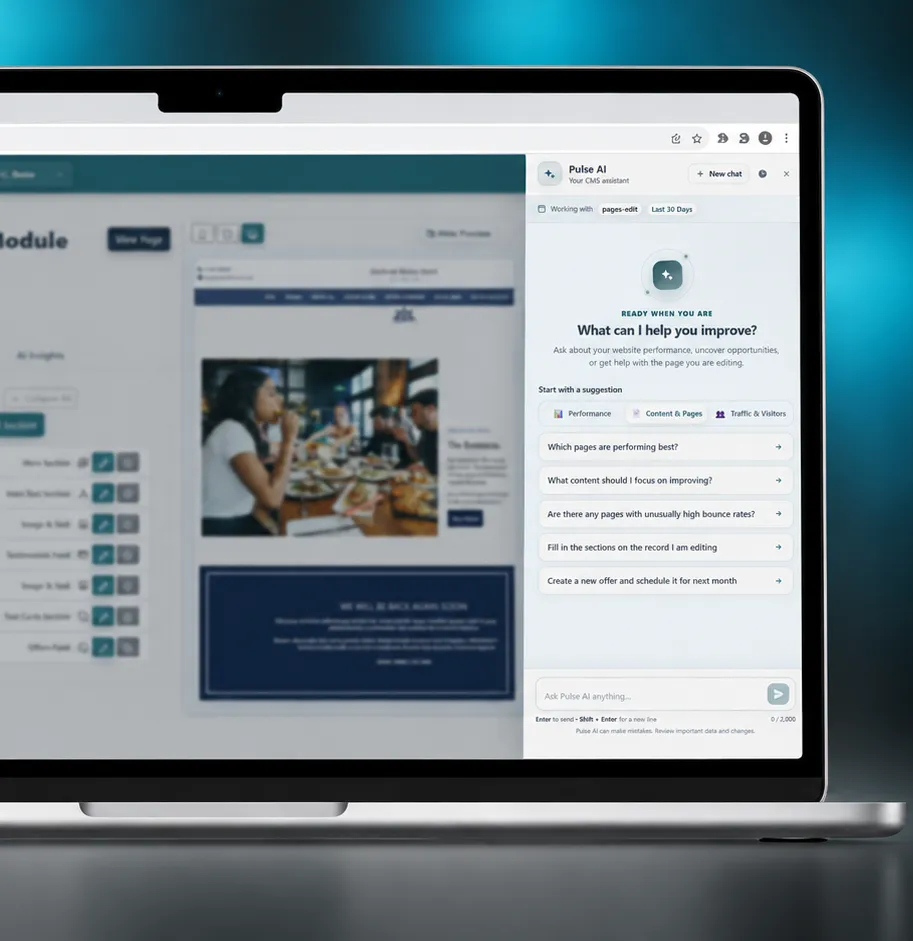
Laptop displaying a page creation module with a Pulse AI CMS assistant panel for improving a dining webpage.

Build a consistent view of website and campaign performance

For regular reporting, work to a small set of measures across every property, such as direct booking revenue, conversion rate, average booking value, cost per booking, mobile performance and campaign-attributed revenue. A short list of trusted measures supports better comparison than a crowded dashboard built on inconsistent calculations.

See the group and property picture together

Viewing portfolio and property performance together helps teams see whether a result reflects a group-wide trend or a specific opportunity. One hotel may attract less traffic but convert more visitors at a higher booking value. A connected view shows where extra campaign spend may perform better and where another property’s website journey needs attention.

Connect campaign activity to commercial outcomes

Clicks, sessions and impressions remain useful diagnostic measures, but they are not the final outcome. Consistent campaign tracking across every property website and booking journey makes it easier to see which channels contribute to bookings, revenue and valuable enquiries.

Treat gift vouchers as a measurable direct-revenue channel

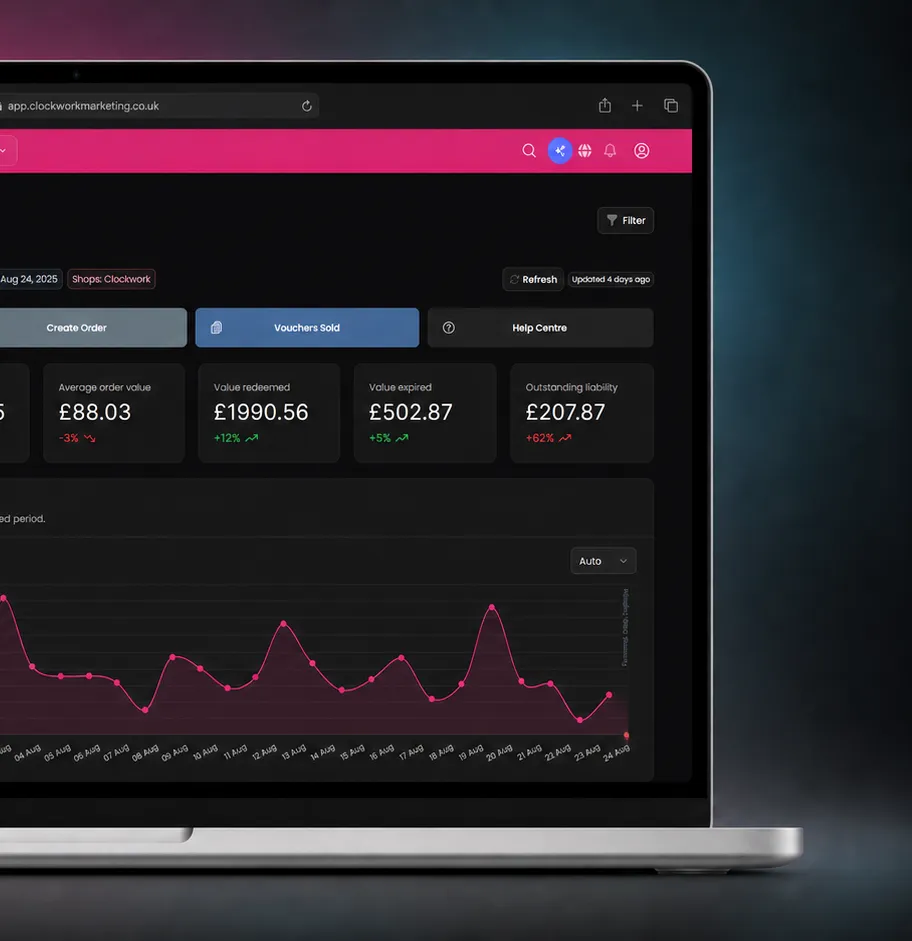
Gift vouchers are often reported separately from website and campaign performance, particularly when sales take place through a third-party platform. That separation can cause groups to underestimate their commercial value. A group view makes it possible to see which properties, packages and campaigns generate the strongest sales. Essential measures include sales value, average order value, campaign source and redemption patterns.

Compare properties fairly and turn reporting into decisions

A simple revenue league table can mislead because hotels vary in size, market, seasonality and inventory. Combining absolute results with conversion, growth, booking value and channel efficiency gives a fairer view of performance.

Group reporting should make successful examples visible so ideas can be tested elsewhere. Weaker performance should prompt diagnosis rather than blame. The useful question is not simply “Which hotel is behind?” but “What is different here, and what can we change?”

Turn reporting into decisions, not another dashboard

A shared reporting view only creates value if it leads to action. Design it around exceptions, trends and targets rather than trying to display every possible metric at once.

Different audiences need different detail:

  • Leaders need direct revenue, growth, efficiency, risks and investment priorities.
  • Group marketers need property, campaign and conversion insight.
  • Property teams need clear actions for content, offers and booking journeys.

Where possible, pair each insight with an agreed action, owner and review date. This turns reporting from a backward-looking monthly exercise into part of the group’s operating rhythm.

Laptop displaying the GiftVoucherBrilliance Clockwork gift voucher dashboard with sales analytics and a line chart.

Use AI to move from reporting to recommendations

Bringing data together creates an opportunity to use AI to uncover insights and recommend new initiatives. With an integrated Model Context Protocol (MCP), AI can interrogate connected website visitor and behaviour data, sales information and website content across the group.

That helps marketers explore past performance, identify gaps and seasonal trends, and develop new ideas. Behavioural data can help prioritise next steps: refine a landing page, strengthen an offer, address booking-journey friction or shift budget towards a better-performing audience.

AI can also suggest content, offers and pages based on real demand. Rising interest in spa breaks, family stays or local experiences can inform a responsive content plan rather than a fixed annual schedule.

AI should support, not replace, judgement. Recommendations still need review by people who understand the property, brand and commercial context. Used well, MCP and AI shorten the journey from data to useful action.

Creating one clearer view with Clockwork Marketing

Clockwork Marketing supports this by bringing multiple property websites under one CMS while retaining relevant local control. Shared structures reduce duplication and create a stronger foundation for portfolio-wide reporting.

Website, campaign and voucher performance can then be considered together. The value is not the dashboard itself, but the ability to identify opportunities, share lessons and invest with greater confidence.

Turn clearer insight into confident action

Hotel groups do not need more isolated figures. They need one trusted view that shows where direct performance is strong, where opportunities are being missed and what to change next. Get that right and reporting becomes a practical tool for deciding where to focus and invest.

How joined-up is your hotel group’s technology and reporting? Complete the Hospitality Group Technology Audit to identify gaps, duplication and opportunities across your websites, booking journey, voucher platform, tracking and reporting.

Start the technology audit.

Free resource for hospitality groups

Free hospitality group technology audit and guide

Assess your group's technology stack, uncover inefficiencies, identify quick wins and create a practical roadmap for improvement.

  • ✓ Gain a clear view of your group's current technology landscape.
  • ✓ Uncover quick wins that improve efficiency, reporting and guest experience.
  • ✓ Make more confident decisions about future technology, suppliers and integrations.
Download the free audit and guide
Content author

Pete Stevens

Pete Stevens is Head of Partnerships at Clockwork Marketing and has spent his career helping hospitality businesses get more from their marketing, technology and digital presence. Working closely with hotel groups, industry bodies and hospitality leaders across the UK, he shares practical insights on the trends, challenges and opportunities shaping the future of hospitality.